Wholesale Umbrellas for Importers and Distributors
Buying umbrellas wholesale is an inventory decision before it is a product decision. The unit price matters, but what actually decides whether the range works is the assortment, the carton configuration and whether the second order matches the first.
Review custom umbrella manufacturing for the production route, or promotional umbrella planning when the order serves a campaign or corporate gift brief.
We supply wholesale and bulk umbrella orders to importers, distributors, retail chains and e-commerce sellers from our factory in Shaoxing. This page covers the commercial mechanics: how a mixed order is built, what drives unit cost, how cartons affect landed cost, and how a repeat order is kept consistent with the first shipment.
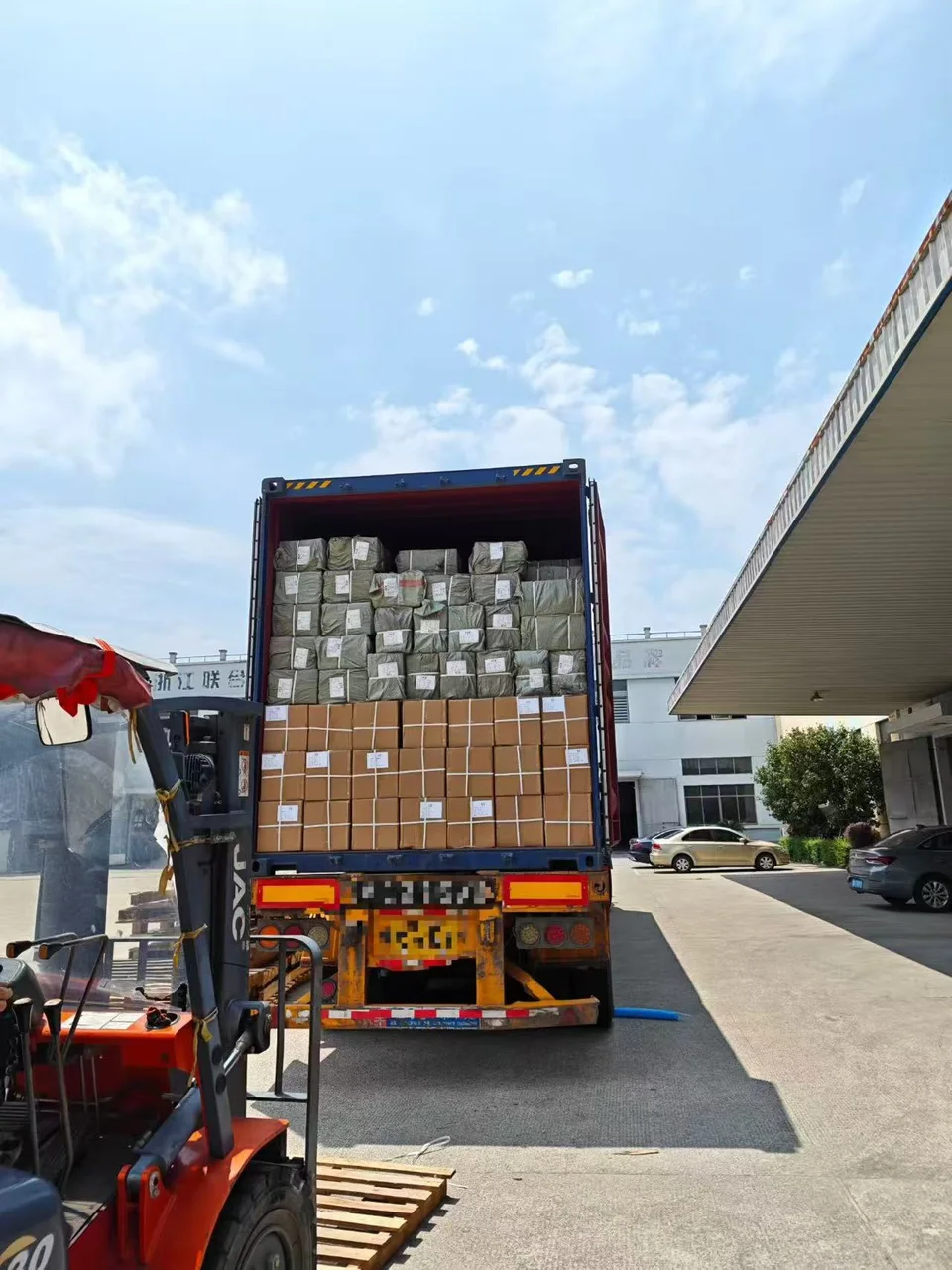
What changes at wholesale volume
At sample quantity, everything is negotiable. At container quantity, three things stop being flexible and start driving the order.
- Fabric dye lots. Canopy fabric is dyed in batches. A 3,000-piece order in one colour is a single lot; the same order split across two production runs may show a visible difference. If colour consistency matters for retail, place the full year's volume in one run or accept a tolerance in writing.
- Assortment breadth against MOQ. Six colours at 500 pieces each is not the same order as 3,000 pieces of one colour. Each variant carries its own minimum, so breadth multiplies the constraint rather than dividing it.
- Carton configuration. The number of units per carton decides how much air you ship. This is the most overlooked line in a wholesale quotation and it moves landed cost more than most buyers expect.
Building an assortment
Most first orders fail by being too broad. A narrower range that sells through beats a wide range that leaves dead stock in three formats.
| Role in the range | Format | Typical share of a first order |
|---|---|---|
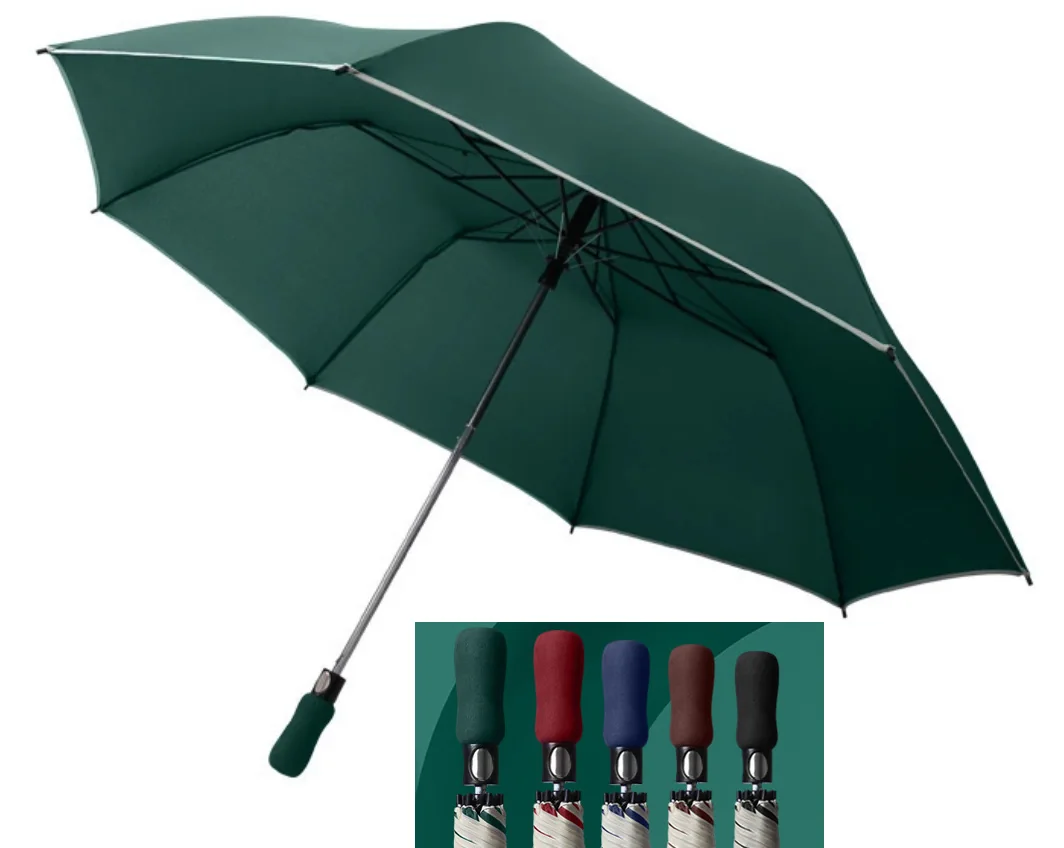
| Volume driver | Automatic folding, 58 cm | 40–60% |
| Entry price point | Manual folding | 15–25% |
| Margin item | Golf / large canopy | 10–20% |
| Gifting and impulse | Mini & capsule | 10–15% |
| Differentiation | Transparent, vintage, reverse | 5–15% |
These are starting proportions, not rules. A market with a long rainy season and a low average price point will skew toward manual folding; a gifting-led market will skew toward mini and capsule. The right mix comes from what your customers already buy, not from a template.
What drives the unit cost
Buyers often compare quotations on unit price alone and then find the difference was never in the price — it was in the specification. These are the variables that move cost, roughly in order of impact.
| Cost driver | What changes | Effect |
|---|---|---|
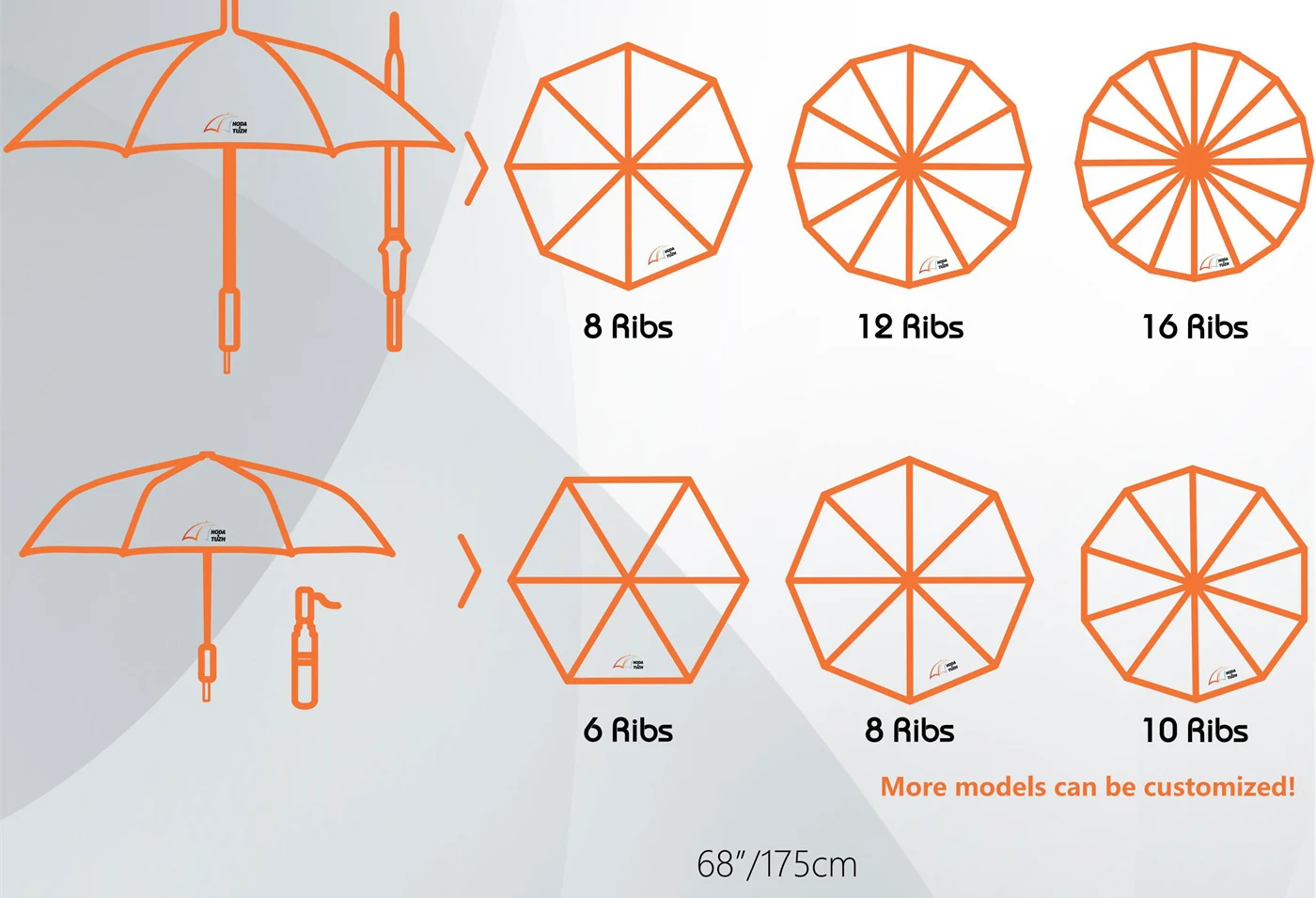
| Frame and ribs | Steel vs fibreglass vs aluminium; 8 vs 10 vs 12 ribs | Largest single variable after fabric; also the main driver of returns and complaints |
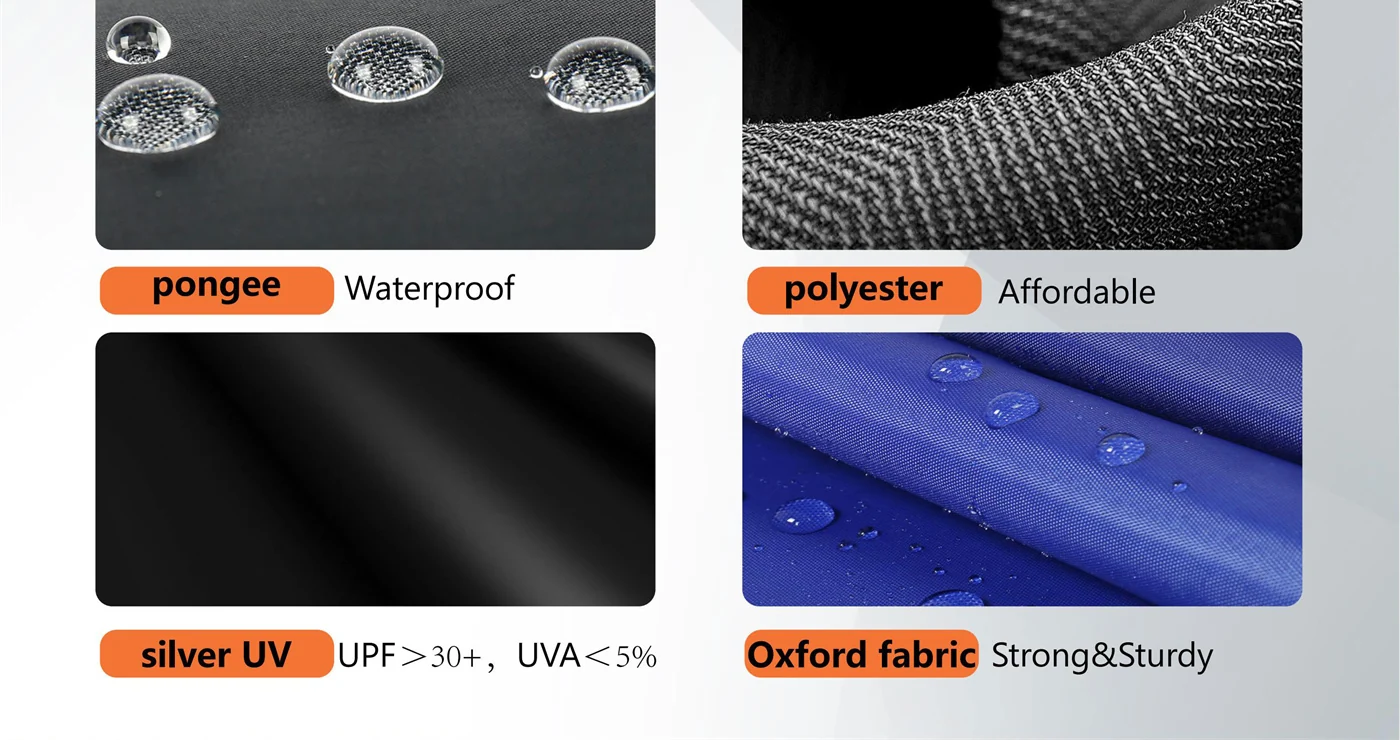
| Canopy fabric | 190T vs 210T pongee, polyester, PVC; coating type | Fabric weight and coating both move cost, and coating affects print method |
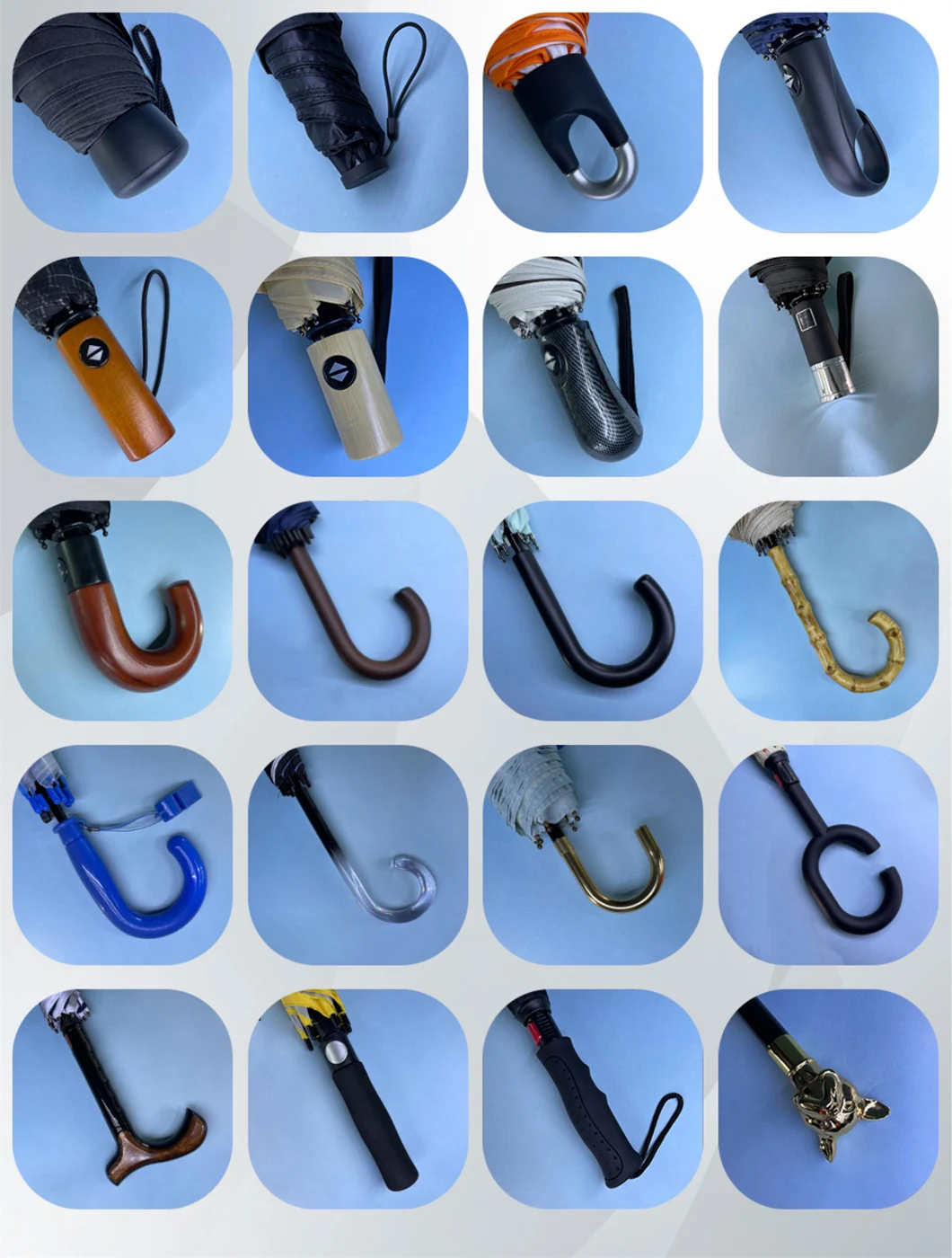
| Handle and shaft | ABS, rubberised, wood-effect, ring handle | Small per unit, but the first component to feel cheap in the hand |
| Method, colour count, coverage area | Setup-dominated: cost per unit falls sharply with quantity | |
| Packing | Polybag, sleeve, gift box, retail carton | Packaging can add more than the print on low-price models |
| Order quantity | Per model, per colour | Setup and fabric minimums are amortised across the run |
Two quotations that differ by 20% are almost never the same product. Ask which frame, which fabric weight and how many units per carton — the answer usually explains the gap before you start negotiating.
Cartons, cubic metres and landed cost
This is the part of a wholesale order that is decided last and costs the most to get wrong.
A carton holds a fixed number of units — 60 pieces per carton is common for folding models, and the figure is listed against each model on its specification page. What matters for freight is not the piece count but the carton dimensions, because sea freight is charged on volume and air freight on chargeable weight.
- Sea freight is priced per cubic metre (CBM). Carton volume × carton count = total CBM. A 20 ft container holds roughly 26–28 CBM of cartons; a 40 ft high cube roughly 65–68 CBM.
- Air freight is priced on chargeable weight, which is the greater of actual weight and volumetric weight. Volumetric weight in kilograms = length × width × height in cm ÷ 6000.
- Umbrellas are light for their volume, which is why air freight is rarely economic on folding models and why carton efficiency matters more than unit weight.
Practically: ask for the carton dimensions and the units per carton before comparing two suppliers' prices. A model that packs 60 per carton against one that packs 48 can be cheaper per unit and more expensive per cubic metre.
MOQ and phasing a first order
Minimum order quantity is set per model and per finish. It is driven by the fabric minimum from the mill, the print setup, and whether any component needs tooling — which is why a catalogue model with one-colour print starts lower than a bespoke build with a new handle mould.
For a first order, the usual approach is to lead with two or three proven formats at full quantity rather than six formats at minimum quantity. It reduces the risk of dead stock and gives a cleaner read on what reorders. 300 pieces for catalogue models; mixed-model orders are quoted as a set, with the constraint stated per line.
We do not hold finished stock for buyers. Production is made to order, which is why the specification has to be fixed before the run rather than adjusted during it.
Keeping the second order identical
The most common wholesale complaint is not quality — it is drift. The second shipment is slightly different from the first, and the buyer discovers it after the goods arrive.
Four things are recorded at sample approval and used for every repeat:
- Locked specificationModel, rib count, fabric weight, coating, handle and print method are written into the order, not carried in email history.
- Retained sampleA physical approved sample is kept against the order reference. Repeat production is checked against it, not against a photograph.
- Colour referencePantone reference for print and a fabric swatch for the canopy, with a stated tolerance for dye-lot variation between runs.
- Carton and packing recordUnits per carton, carton dimensions and labelling, so freight calculations and warehouse handling stay stable.
Documentation and market requirements
Export paperwork is prepared against the terms in the quotation: commercial invoice, packing list, certificate of origin, and any destination-specific document the buyer's customs broker requires. We ship FOB or CIF from Ningbo or Shanghai.
Conformity requirements differ by market and by product. Children's umbrellas, for example, are treated differently from adult umbrellas in most jurisdictions, and labelling rules for retail packaging vary. Tell us the destination market at enquiry stage and we confirm what applies to that specific product — we do not assume one market's requirements cover another.
Seasonality and inventory timing
Umbrella demand is weather-driven, and the weather calendar is not the same everywhere. Order timing should follow the market you are selling into, not the calendar of the factory.
| Market | Demand peak | Production should start |
|---|---|---|
| UK, Ireland, Northern Europe | October–March | June–August |
| Germany, Central Europe | April–July, plus Q4 gifting | January–March, and July for gifting |
| Brazil, Southern cone | November–February | August–October |
| Mexico, Central America | May–October | February–April |
| Southeast Asia | June–October monsoon | March–May |
| Gulf states | November–March rain, plus gifting windows | July–September |
Production lead time is 30 days after sample approval, and shipping is additional. Peak season in the factory is the same everywhere — everyone orders for the northern autumn at once — so a July order for a December programme is normal, and a September order for the same programme is late.
Inspection and claims
Inspection happens before the cartons are sealed, not after they arrive. Incoming fabric and frames are checked against the approved specification; canopies are checked in line for stitching and alignment; finished units are opened and closed; print registration is checked; carton counts are verified. Photographs are shared before shipment, and third-party inspection at the factory is welcome.
If something is wrong on arrival, the resolution runs against the approved sample and the packing record. That is the practical reason both exist — a claim without a retained sample becomes a conversation about memory.
Common questions
What is the minimum order quantity for wholesale umbrellas?
The figure is confirmed per model and finish. It is driven by the fabric minimum, the print setup and whether any component needs tooling, so a bespoke build carries a higher minimum than a listed model. Mixed-model orders are quoted as a set with the constraint stated per line.
Can I mix several models in one order?
Yes, and most first orders do. Each model and colour carries its own minimum, so breadth multiplies the constraint rather than dividing it. The practical approach is two or three proven formats at full quantity rather than six at minimum.
How do price breaks work?
Cost falls with quantity because setup is amortised: print screens or transfer setup, fabric minimums from the mill, and any tooling. The largest drop is usually between the minimum and the first full production run; beyond that the curve flattens. Ask for a price at two or three quantities rather than one.
Do you hold stock for repeat orders?
No. Production is made to order, which is why the specification has to be fixed before the run. If you need continuity across a season, the usual approach is to place the full season's volume in one production run rather than several smaller ones.
How long does production take?
Sample lead time runs from approved artwork and specification, production runs after sample approval, and freight is additional. Peak season in the factory coincides with the northern autumn, so lead times are tightest for orders placed in August and September.
Which shipping terms do you work on?
FOB and CIF from Ningbo or Shanghai, with the Incoterm stated in the quotation rather than assumed. Carton dimensions and units per carton are provided so freight can be costed accurately before the order is placed.
Can you produce our own brand packaging?
Yes — sleeve, gift box, printed carton, barcode and retail labelling. Packaging has to be specified with the umbrella rather than after it, because box dimensions follow the folded size of the specific model. Label content and language requirements are confirmed per market.
What documentation is provided?
Commercial invoice, packing list and certificate of origin, plus any destination-specific document your customs broker requires. The exact set is stated in the quotation so nothing is discovered at the port.
What to send for a wholesale quotation
Model or format, quantity per model, destination market and required delivery window. If the range is still open, send the market, the price point you are selling at and the formats you already stock — that is enough to propose a workable assortment and quote it properly.